

What Are Ghost Plates and Why Are Authorities Concerned?
Most motorists understand that speed cameras, congestion charge cameras and police Automatic Number Plate Recognition (ANPR) systems play a vital role in enforcing road traffic laws across the UK. However, a growing concern among police, lawmakers and road safety campaigners is the increasing use of so-called "ghost plates" , also known as "stealth plates", which are designed to evade detection by enforcement cameras.
While they may appear perfectly legal to the naked eye, ghost plates have been modified to interfere with ANPR technology, preventing cameras from accurately identifying a vehicle. The alterations can take several forms, including highly reflective coatings, transparent films, modified lettering or specialist materials that distort how a registration mark appears to a camera. As a result, a plate that looks normal to other road users may appear blurred, obscured or entirely unreadable when viewed through an ANPR system.
The consequences can be significant. By preventing accurate identification, ghost plates may allow motorists to avoid detection for speeding offences, congestion charges, parking penalties and other traffic-related offences. More concerningly, law enforcement professionals have warned that the technology is increasingly being linked to wider criminal activity, including organised crime, drug trafficking and vehicle-related offences. As police forces continue to rely heavily on ANPR systems to identify uninsured drivers, stolen vehicles and suspects linked to criminal investigations, anything that undermines that technology presents a growing challenge for both road safety and law enforcement.
To a passing motorist, a ghost plate may look completely normal. To an ANPR camera, it may be virtually invisible.
Why Does ANPR Matter?
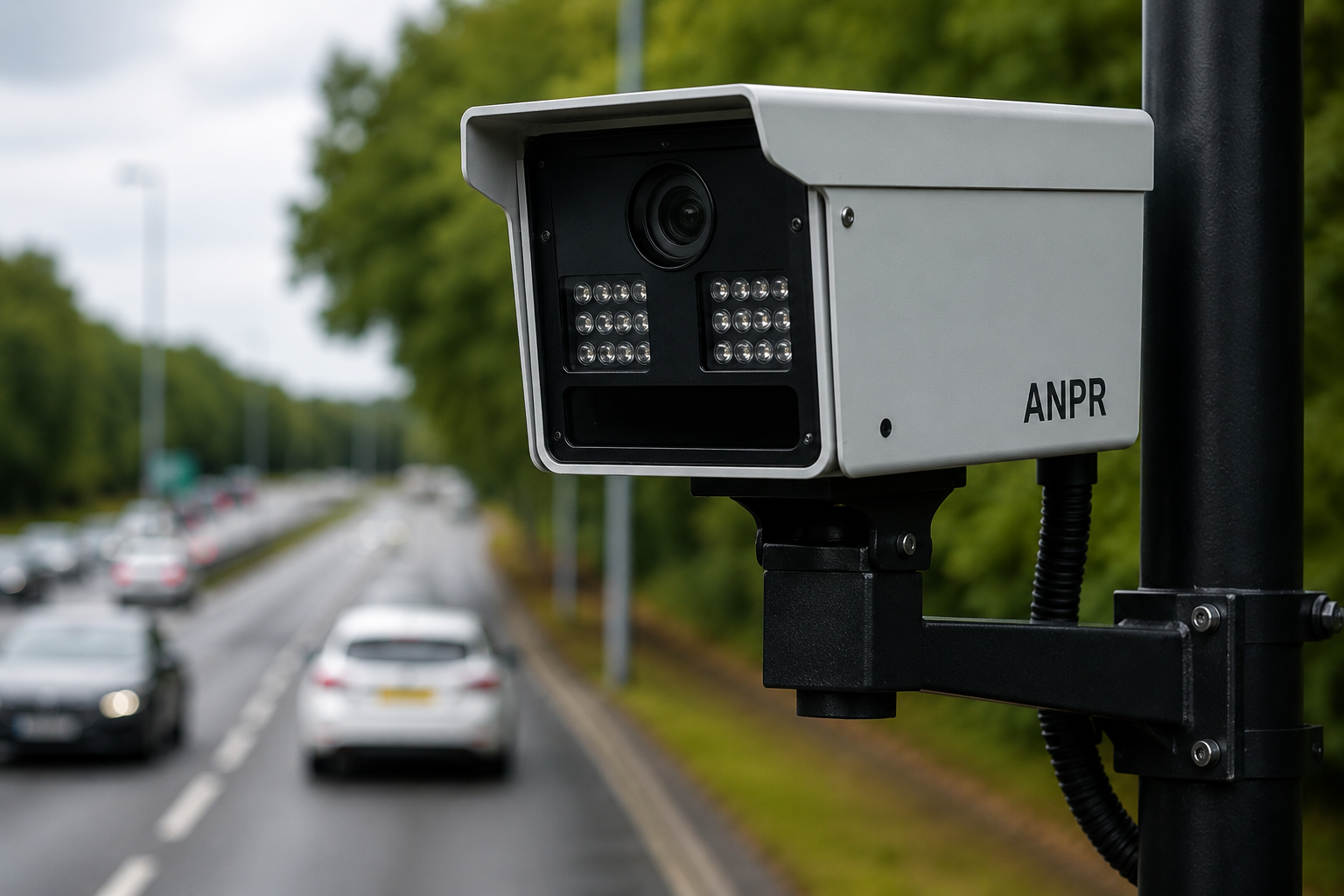
Automatic Number Plate Recognition technology has become one of the most important tools available to modern policing. Every day, ANPR systems help police identify stolen vehicles, uninsured drivers, wanted suspects and vehicles linked to criminal investigations. The technology is also used to enforce road charging schemes, congestion zones and certain traffic restrictions.
When a vehicle passes an ANPR camera, its registration number is automatically read and checked against numerous databases within seconds.
This allows officers to identify vehicles linked to:
- Disqualified drivers
- Uninsured vehicles
- Stolen vehicles
- Serious criminal investigations
- Outstanding warrants
- Road traffic offences
For most motorists, the technology operates quietly in the background. However, for those seeking to avoid detection, ghost plates present a way of bypassing the system altogether.
A Road Traffic Issue or a Criminal Justice Issue?
Much of the public discussion surrounding ghost plates focuses on speeding offences and avoiding fines. However, concerns raised by law enforcement professionals suggest the issue extends far beyond ordinary traffic enforcement.
Former British Transport Police officer Chris Shepherd recently warned that ghost plates have been linked to organised criminal activity, including drug trafficking, people smuggling and offences involving violence against women and girls If a vehicle cannot be identified by roadside cameras, it becomes significantly harder for police to track movements, identify suspects and gather intelligence.
This is why many experts no longer view ghost plates as simply a motoring issue. Increasingly, they are being treated as a wider public safety concern.
"It also allows people who are dealing drugs, doing serious crimes, to go undetected on police cameras." - Sarah Coombes MP
How Widespread Is the Problem?
The true scale of ghost plate use is difficult to quantify because, by their very nature, the plates are designed to avoid detection. However, concerns have been raised following a report produced by a cross-party group of MPs and members of the House of Lords, which suggested that as many as one in 15 vehicles on UK roads could be displaying modified or non-compliant registration plates. If accurate, that would represent a significant challenge for both road policing and wider criminal investigations.
The report also highlighted concerns surrounding the UK's number plate supply system. With approximately 35,000 registered plate suppliers across the country, campaigners have argued that greater oversight may be required to prevent illegal plates entering circulation.
The findings have prompted calls for tighter regulation and stronger enforcement measures.
Why Are Ghost Plates Still Being Sold?
One of the most surprising aspects of the debate is that ghost plates themselves are often readily available for purchase online. This frequently leads motorists to assume they must be legal, buy that is not necessarily the case.There is an important distinction between purchasing a modified plate and using it on a vehicle on a public road.
Whilst certain products may be marketed online, displaying a registration plate that fails to comply with legal requirements remains unlawful. Many motorists may not appreciate that number plate legislation is highly prescriptive, governing everything from font style and spacing through to reflectivity and visibility.
A registration plate does not have to be completely unreadable to be illegal. Even relatively minor modifications can result in enforcement action.
What Are the Current Penalties?
At present, motorists found using an illegal number plate can face a fixed penalty notice. The current penalty is typically £100. However, critics argue that this does little to deter individuals deliberately using ghost plates to avoid camera enforcement. This has led to increasing calls for tougher sanctions and stronger enforcement powers.
Recommendations put forward by parliamentarians have included criminal record checks for suppliers, greater compliance monitoring and enhanced inspection requirements.
Some have also suggested that number plate compliance checks should form part of the MOT process.
Could the Law Be About to Change?
The Department for Transport has already acknowledged concerns surrounding ghost plates and illegal registration marks. As part of its road safety strategy, the government has consulted on proposals aimed at strengthening enforcement and increasing penalties for motorists using illegal plates. The consultation also explored potential changes to number plate standards and methods of improving compliance across the industry.
While no final reforms have yet been announced, it is clear that lawmakers are taking the issue seriously. Given the increasing reliance on ANPR technology, many believe tougher regulation is inevitable.
Case Study Example: More Than Just a Number Plate Offence
A driver is stopped by police after officers notice that their registration plate appears unusually reflective under roadside lighting.Further examination reveals a specialist film has been applied to the plate, making it difficult for ANPR cameras to read accurately. The driver initially argues that the plate was purchased online and believed to be legal.
However, investigations reveal the vehicle has repeatedly travelled through road charging zones without detection and has avoided identification by multiple enforcement cameras.What initially appeared to be a minor number plate issue quickly develops into a much wider investigation.
While every case depends on its individual facts, the example demonstrates why police and lawmakers view ghost plates as far more serious than a simple registration defect.
What Should Motorists Know?
For law-abiding motorists, the message is straightforward. Registration plates must comply with strict legal requirements, and any product advertised as making a vehicle harder for cameras to detect should be approached with extreme caution.
If a plate is designed to prevent identification by enforcement systems, there is a significant risk that it may be unlawful to use on public roads.
Motorists should also remember that the consequences may extend beyond a financial penalty. In some circumstances, an illegal number plate could attract further scrutiny from police and enforcement agencies.
Conclusion
Ghost plates may sound like something from a crime drama, but they represent a very real challenge for modern policing. As ANPR technology becomes increasingly important in tackling both road traffic offences and serious criminal activity, attempts to defeat those systems are attracting greater attention from lawmakers and enforcement agencies alike.
While most drivers have no desire to evade detection, the growing availability of ghost plates has sparked an important debate about road safety, accountability and whether current penalties go far enough.
With government consultations now complete and pressure mounting for reform, this is likely to remain a significant motoring law issue for years to come.
Contact M.A.J Law
If you have been accused of displaying an illegal registration plate or are facing investigation for a road traffic offence, M.A.J Law's specialist motoring offence solicitors may be able to help.
For expert advice tailored to your circumstances, contact our team today.